
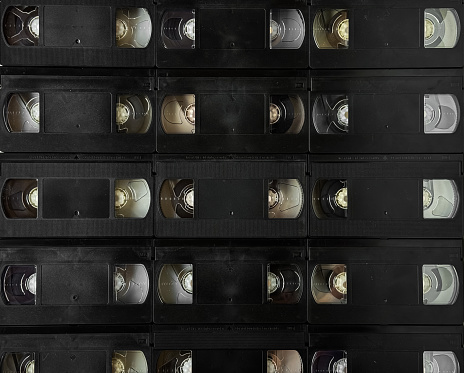
Those old VHS tapes of birthday parties, family reunions, and that trip to Disneyland in 1994 aren’t just nostalgia — they’re the only copies of moments you’ll never get back. And VHS tape degrades every year. Magnetic tape is notorious for color bleeding, dropouts, and the dreaded sticky-shed syndrome that can destroy a tape permanently.
The good news: converting your analog video to digital is easier and cheaper than ever. This guide covers the best VHS-to-digital converters available in 2026, from simple capture devices to professional-grade solutions.
Quick Recommendations
- Best Overall: Elgato Video Capture — Dead simple, solid quality, works with any video source
- Best Budget: Roxio Easy VHS to DVD — All-in-one software and hardware bundle
- Best No-Computer Required: ClearClick Video to Digital Converter 2.0 — Records directly to USB or SD card
- Best for Large Collections: Magwell VHS to Digital Converter — Standalone with LCD preview screen
Understanding VHS to Digital Conversion
Before buying anything, understand the basic conversion chain:
VHS Player → Capture Device → Computer/Storage
The VHS player is your source. If you don’t have one, you’ll need a VCR. Good ones are increasingly hard to find — look for Sony SLV-N series, Panasonic DMR line, or JVC SRW series. Avoid cheap universal players; they often produce inferior output.
The capture device converts the analog signal (composite or S-Video) to digital. This is where quality varies most. Higher bitrate captures (10-15 Mbps minimum for DVD quality) preserve detail better than real-time compression.
The Best VHS to Digital Converters
Elgato Video Capture
The Elgato Video Capture is the most popular consumer converter for good reason: it just works. You connect composite or S-Video from your VCR, run the included software on your Mac or PC, and it captures in DVD-quality H.264. The software handles format detection and includes basic editing (trim, titles).
Pros: Dead simple setup, reliable software, good output quality (720×576 for PAL, 720×480 for NTSC), automatic chapter detection
Cons: Windows only (though works on Mac with Parallels or Boot Camp), captures to MPG format which requires conversion for some uses
Price: ~$80
Roxio Easy VHS to DVD
Roxio’s bundle includes both hardware (a USB capture device) and software. The software is more full-featured than Elgato’s — it includes video editing, disc burning, and one-click upload to YouTube. Great if you want to output directly to DVD.
Pros: All-in-one solution, includes DVD burning, decent editing software, one-step upload to social media
Cons: Software can be bloated and slow, capture quality is adequate but not excellent
Price: ~$80-100
ClearClick Video to Digital Converter 2.0
This is the only converter in this list that doesn’t require a computer at all. It captures directly to a USB flash drive or SD card as MP4 files. Connect your VCR, press record, and watch the live preview on the built-in 3-inch LCD screen.
Pros: No computer required, portable, records in H.264 MP4, includes remote control
Cons: Maximum 720×480 resolution, no editing capability, you control recording manually
Price: ~$70
VIDBOX Video Conversion Suite
VIDBOX is another all-in-one solution popular on Amazon. It bundles capture hardware with software that can handle VHS, 8mm film, and even audio cassettes. The software supports Windows and Mac and outputs to MP4, AVI, or DVD format.
Pros: Converts multiple formats (VHS, 8mm, audio), Mac and Windows, good software bundle
Cons: Software is clunky, capture quality is average, requires the bundled software to capture
Price: ~$50-70
Standalone Converters for Large Collections
If you have hundreds of tapes to convert, a computer-based solution becomes a bottleneck. These standalone converters let you batch process without tying up a PC:
Magwell VHS to Digital Recorder
~$90 on Amazon. Records to USB or SD card. 3-inch preview LCD. Captures at 720×480. The advantage: you can connect it to any VCR and just press record — no computer needed, no software to crash or hang.
AMTful VHS to Digital Converter
~$60-80. Similar concept to the Magwell — standalone recording with LCD preview. Records to USB or microSD. Generally good reviews but build quality is hit-or-miss.
How to Get Better Quality from Your VHS Transfers
Before converting, do what you can to maximize source quality:
- Clean the VCR heads — Dirty heads blur details and cause color artifacts. Use a dry VCR cleaning cassette for 10-20 seconds.
- Use S-Video if possible — S-Video carries luminance and chrominance separately, giving better color than composite (the yellow RCA plug). Not all VCRs have S-Video output — check your model.
- Let the tape run 30 seconds before recording — Tape that has been sitting still for years needs to “settle” as the magnetic particles redistribute. The first few seconds of any static shot will look rough.
- Avoid pause/record — Starting and stopping recording can cause sync issues. Use the VCR’s playback controls instead of the capture software’s record button.
Post-Processing Your Digital Video
Raw captures often need cleanup:
- Remove jitter — VHS captures commonly have horizontal wobble. Software like VirtualDub can stabilize.
- Color correction — VHS tapes often have washed-out colors. Basic levels adjustment in DaVinci Resolve (free) can bring them back.
- Audio cleanup — VHS audio is typically mono or low-fidelity stereo. Audacity (free) can reduce hiss and hum.
- Noise reduction — Grain and analog noise are characteristic of VHS. HandBrake’s denoise filter helps without destroying detail.
What Resolution Do You Actually Need?
VHS maxes out at about 333 horizontal lines of resolution (roughly equivalent to 480i). Recording at higher resolutions doesn’t add detail — it just makes the low-res footage look larger. Here’s what that means for output:
- 720×480 (DVD quality) — Perfect for VHS. Matches the source resolution exactly.
- 1080p — Fine for playback, but won’t make your VHS look sharper.
- 4K — Completely unnecessary for VHS conversion. You’d be upscaling 333 lines to 2160 lines — no additional detail.
The one exception: if you’re editing and stabilizing, rendering at 1080p gives you room to crop and pan without losing quality.
The Bottom Line
For most people: the Elgato Video Capture is the clear winner. It’s reliable, the software is solid, and the output quality is the best in its class. If you have more than 20 tapes to convert and don’t want to tie up your computer, the ClearClick 2.0 standalone recorder is excellent.
Whatever you choose, start now. Every year those tapes degrade further. And if you have tapes that are already showing color bleeding or tracking problems, you may only have months before they’re unrecoverable.
This guide was last updated April 2026.
For more information, see our guide to complete guide to digitizing photos.
For more information, see our guide to best photo scanning service.
For more information, see our guide to how to scan film negatives.
See also: 8mm Film to Digital.
Leave a Reply